
Plant-Fiber Composite Plastics Usage Guide: Material Selection, Masterbatch Dilution Ratios and Reference Processing Conditions
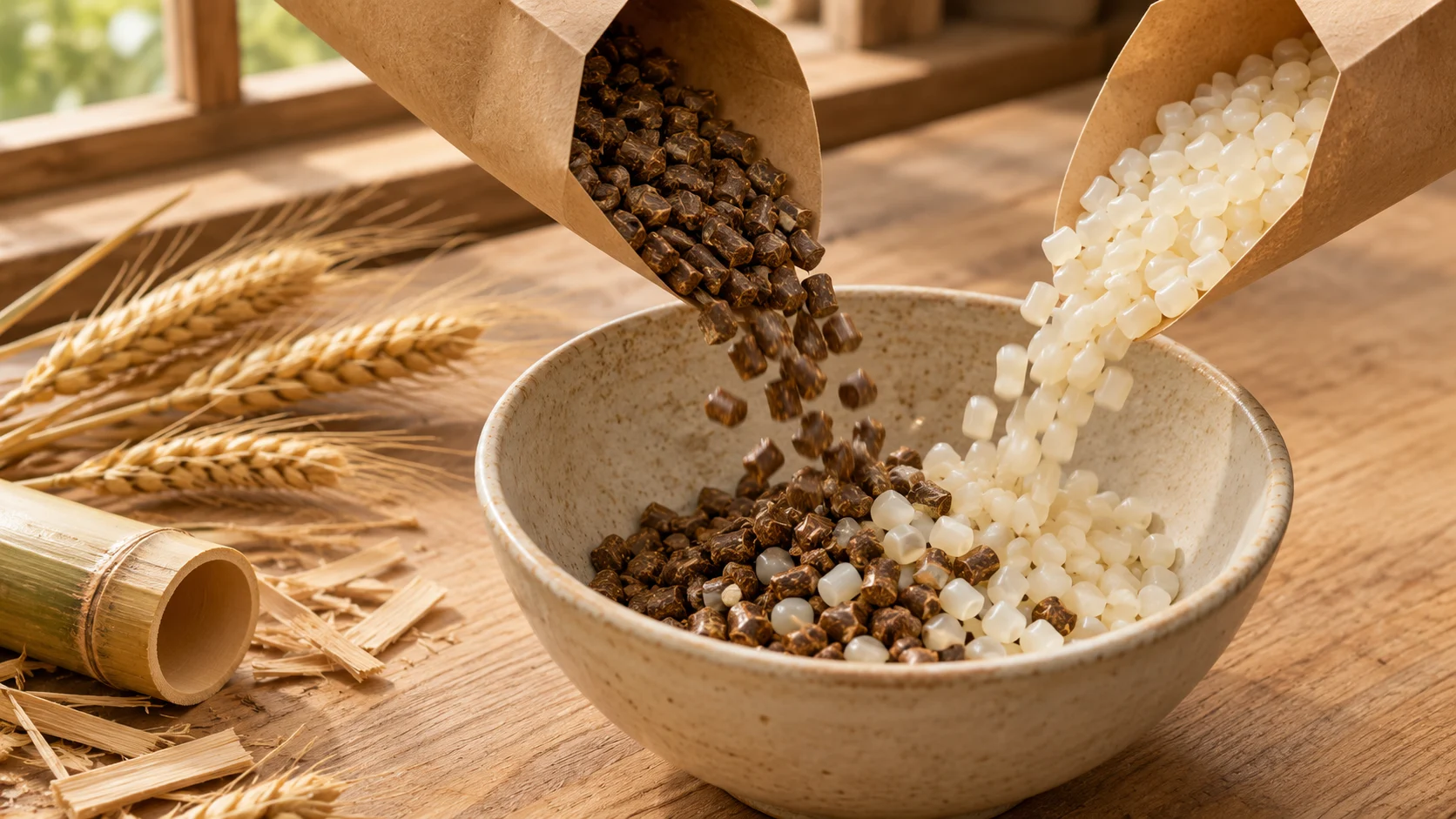
Plant-fiber composite plastics can be injection molded directly, but material form and dilution ratio determine success: precompounded pellets can be processed as ready-to-use material, while concentrated masterbatches must first be mixed with a compatible neat plastic. This article explains both routes, three dilution ratios and their corresponding reference processing conditions.
Buyer and engineer FAQ
Key questions before choosing a material form and dilution ratio
Can plant-fiber composite plastics be used directly for injection molding?
Yes. Precompounded pellets have already had the fiber and resin mixed during pelletization and can go directly into production under the drying and temperature conditions for the grade. Concentrated masterbatches are different: they are concentrates and must first be mixed with a compatible neat plastic at the appropriate ratio before entering the injection-molding machine.
How much neat plastic should be added to a concentrated plant-fiber masterbatch?
For a PP-carrier masterbatch, a masterbatch-to-neat-PP weight ratio of at least 1:1 is recommended; this can also be adjusted to 1:2 or 1:3 according to the part requirements. As the dilution ratio increases, neat PP makes up more of the blend, fiber density decreases and the matrix becomes more prominent. All three ratios are worth sampling before a final decision.
Does a masterbatch's stated 50%–60% mean its plant-fiber content?
Not necessarily. This figure may refer to total filler loading, including other fillers. Before calculating the final fiber mass fraction, confirm the masterbatch's actual plant-fiber content and then apply the dilution ratio; otherwise, the plant content of the part can easily be overestimated.
Is material diluted at 1:3 equivalent to neat PP?
No. As the neat-PP proportion increases, the material progressively shows more of the selected PP matrix's characteristics, but plant fibers still affect interfacial bonding, impact performance and flow. Parts requiring high toughness, dimensional stability or thin-wall filling should be re-evaluated using the actual PP grade and dilution ratio.
Can a PP-carrier masterbatch be added to PE?
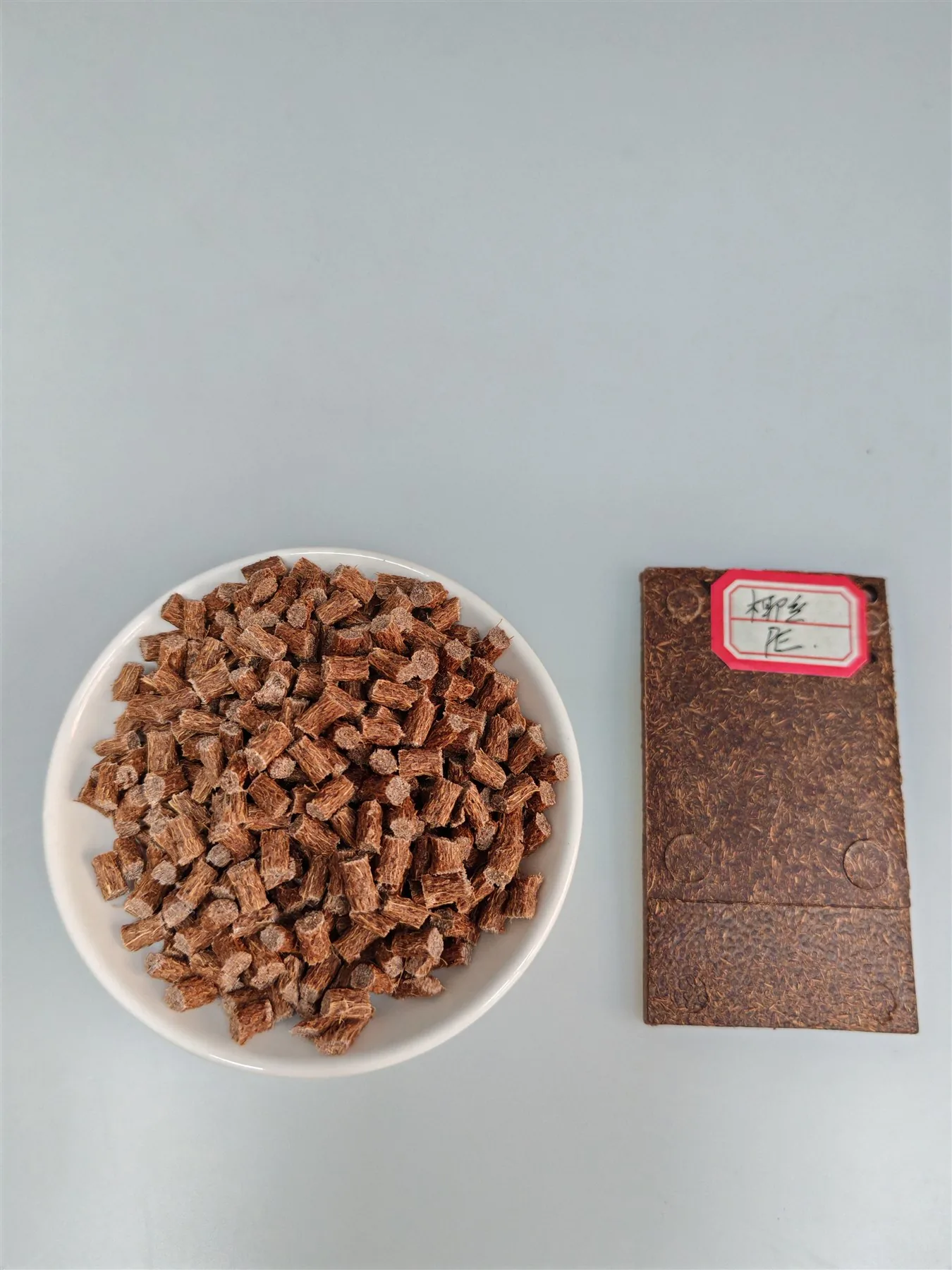
After compatibility assessment, some masterbatches may be explored in PE formulations at addition levels within 5%, depending on the specific formulation. For PE products requiring higher plant-fiber content, a purpose-developed PE-carrier masterbatch is generally preferred, such as coconut-coir PE masterbatch WYC-PE YS60E.
For a quick decision, provide the target part, matrix resin, desired plant-fiber content range, molding method and annual consumption. The engineering team will return a recommended grade, starting dilution ratio and sampling plan.
Can plant-fiber composite plastics be used directly for injection molding? How much neat plastic should be added to a concentrated plant-fiber masterbatch? How do different dilution ratios affect a product's appearance and performance?
Plant-fiber composite plastics can be processed in ways similar to conventional plastics, but their natural plant fibers introduce differences in material proportions, processing temperatures and mold maintenance.
There are currently two main ways to use plant-fiber composites: using precompounded pellets directly, or diluting a concentrated plant-fiber masterbatch before use. This article uses actual WOOYOPET products to explain both approaches and their reference processing conditions.
I. What are plant-fiber composite plastics?
Plant Fiber Composite Plastics are a class of composite materials made by combining natural plant materials such as wheat straw, bamboo fiber, red-pine wood flour, coffee grounds and rice husk with thermoplastics such as PP, PE and ABS, followed by formulation adjustment and pelletization.
These materials can replace a portion of petroleum-based plastic while retaining some processing characteristics of conventional thermoplastics and giving parts natural plant patterns, a granular texture and particular plant scents.
Different plant fibers have different appearance and processing characteristics. Bamboo fiber, for example, can create a fine natural grain, wheat straw typically produces a pale, particulate fiber effect, and red-pine fiber can create a more pronounced woody texture.
Plant-fiber composite plastics should not be equated with fully biodegradable plastics. Their actual performance, processability and environmental attributes depend on the matrix resin, plant-fiber type and formulation proportions.
II. Two main ways to use plant-fiber composite plastics
1. Direct use: precompounded plant-fiber pellets
Direct use is a relatively simple approach for manufacturers who want to produce parts on existing plastics-processing equipment without adding a separate blending step.
WOOYOPET can generally supply precompounded formulations with approximately 10%–20% plant fiber. The plant fiber and plastic have already been mixed during pelletization, allowing the material to be fed directly into equipment under the processing requirements of the product.
The actual fiber proportion can be adjusted to meet appearance and performance requirements; the specific content of each grade depends on its formulation.
Product example 1: wheat-straw PP composite
Grade: WYC-PP P179050
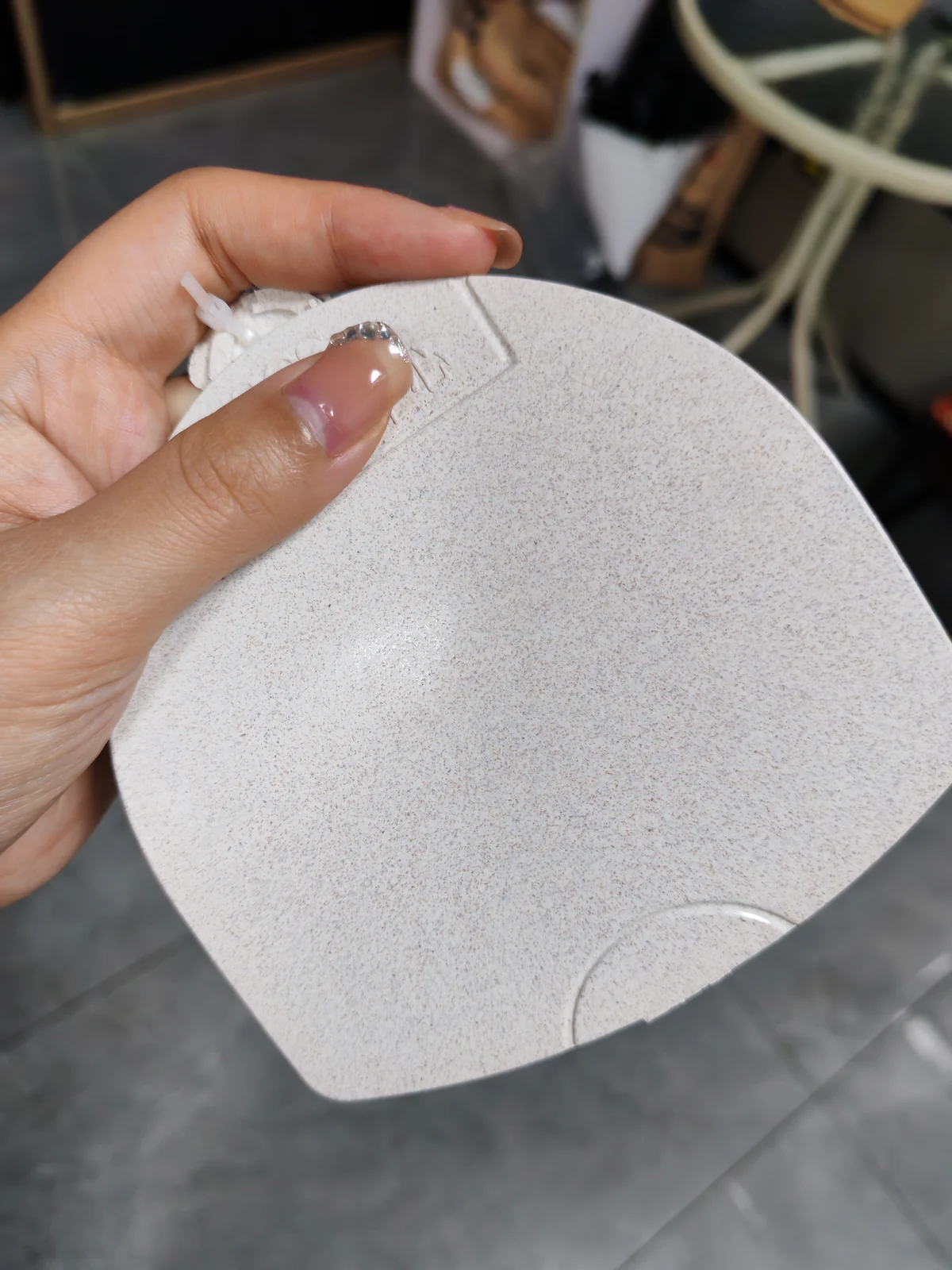
Wheat-straw PP combines a PP matrix with natural wheat-straw fiber. Its color ranges from pale beige to natural straw, with visible plant-fiber particles on the part surface.
Its reference physical properties include:
- Density: 1.35 g/cm³
- Tensile strength: 18 MPa
- Flexural strength: 34 MPa
- Flexural modulus: 2,000 MPa
- Notched impact strength (23 °C): 3.1 kJ/m²
It can be used for flowerpots, storage boxes, hangers, pet products and other everyday injection-molded goods.
This grade is a directly processable compound, and neat PP may also be added to further adjust fiber concentration to suit appearance requirements.
Product example 2: bamboo-fiber PP composite
Grade: WYC-PP P179203
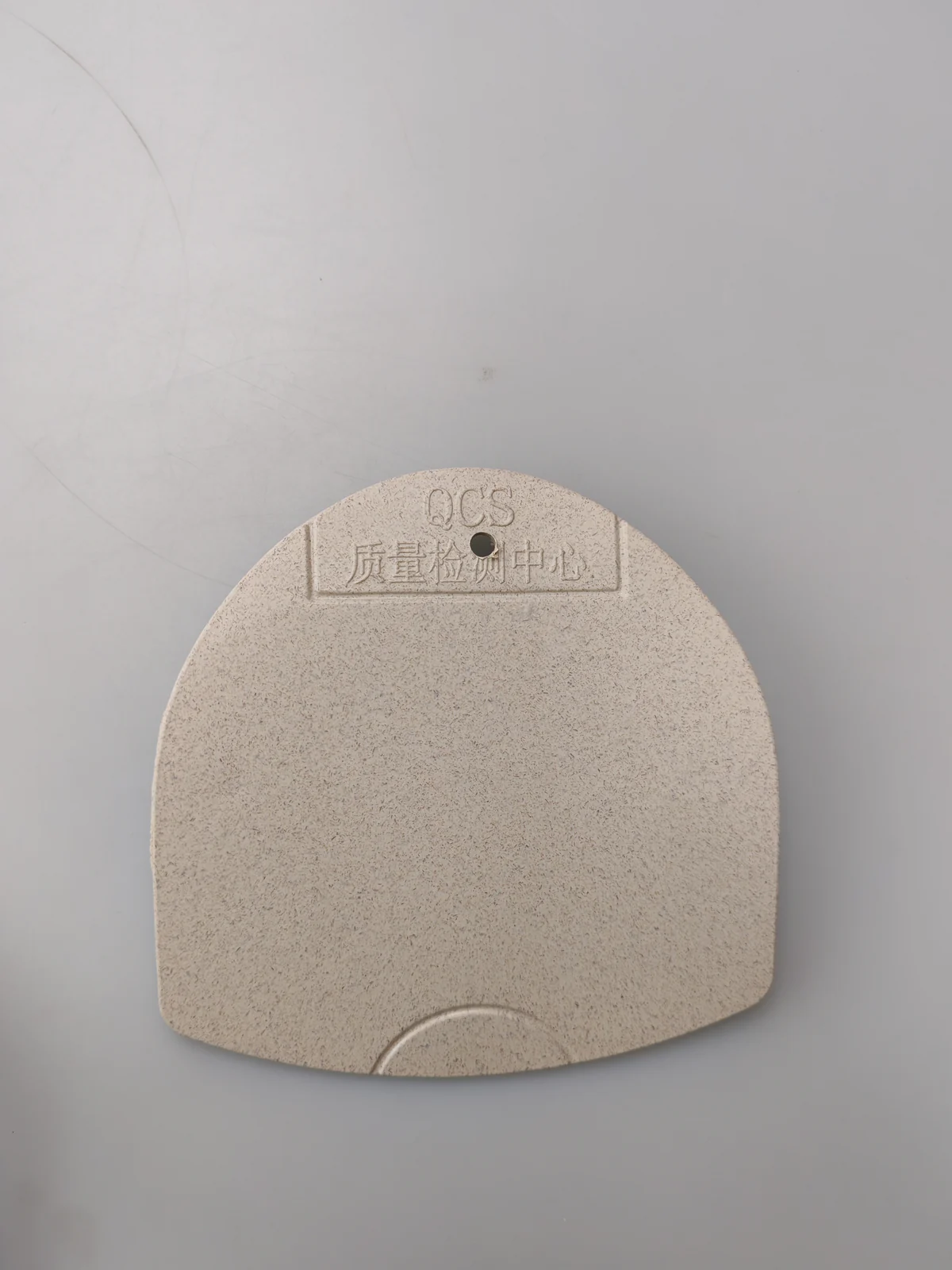
Bamboo-fiber PP combines treated natural bamboo fiber with PP, producing a pale color and a relatively fine plant-fiber grain.
Its reference physical properties include:
- Density: 1.19 g/cm³
- Tensile strength: 35 MPa
- Flexural strength: 62 MPa
- Flexural modulus: 2,420 MPa
- Notched impact strength (23 °C): 4.0 kJ/m²
It suits storage products, flowerpots, hangers, pet accessories and other injection-molded parts requiring a natural plant appearance.
The properties above are published reference data for the corresponding products; they do not mean that every formulation with 10%–20% plant fiber performs identically.
Reference processing conditions for direct use
Plant fibers generally have lower thermal stability than conventional PP, so processing temperature needs particular attention.
For some plant-fiber PP systems, the original neat-PP processing temperature can be reduced by approximately 10–20 °C. 160–190 °C can serve as an initial evaluation range for some formulations, but actual settings should be adjusted to the material grade and equipment.
For example, the reference injection-molding parameters for WYC-PP P179050 and WYC-PP P179203 are as follows:
| Processing item | Reference parameter |
|---|---|
| Material drying | 100–120 °C, 4–5 hours |
| Rear barrel zone | 155–165 °C |
| Middle barrel zone | 160–175 °C |
| Front barrel zone | 160–175 °C |
| Nozzle temperature | 160–175 °C |
| Mold temperature | 70–80 °C |
These parameters are starting reference conditions for specific grades and should not be applied directly to every plant-fiber material. In actual processing, adjust them according to screw design, part wall thickness, mold structure, melt flow and residence time.
Prefer a lower temperature that ensures stable plasticization and complete filling, avoiding unnecessarily high-temperature processing.
2. Use after dilution: concentrated plant-fiber masterbatch
Alongside directly processable compounds, another common approach is to use a plant-fiber masterbatch (Plant Fiber Masterbatch).
Some WOOYOPET concentrated masterbatch formulations have a total filler loading of 50%–60%. Because of this high loading, these products need to be mixed with a compatible neat plastic before use.
For PP-carrier plant-fiber masterbatch, it is generally recommended to dilute at a masterbatch-to-neat-PP weight ratio of at least 1:1. In production, ratios such as 1:2 or 1:3 can also be used according to part requirements.
The main advantage of this approach is that manufacturers can control the final product's plant-fiber concentration, surface grain and certain physical properties themselves.
Product example: red-pine-fiber PP masterbatch
Grade: WYC-PP P179HSML
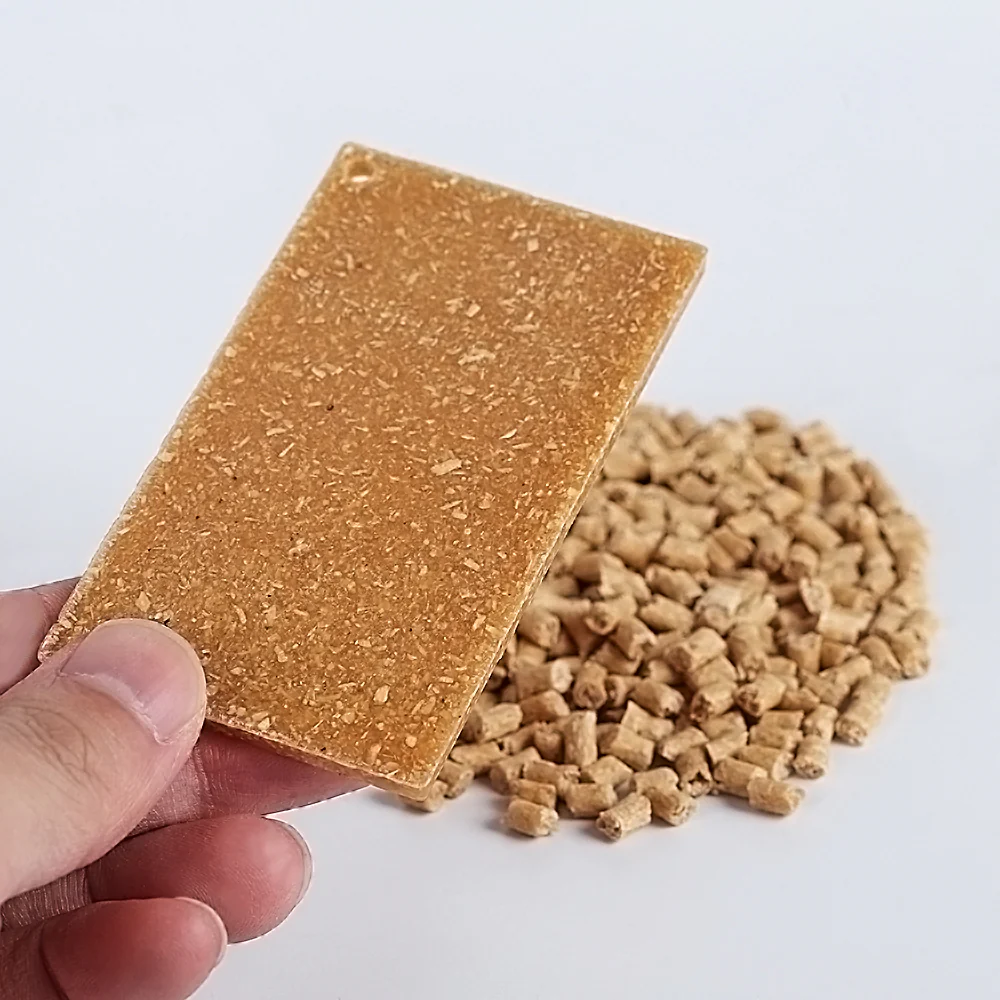
This product combines red-pine wood fiber with PP and is a concentrated masterbatch requiring dilution before use.
The material has a natural reddish-brown wood grain and may retain a faint pine scent under suitable processing conditions.
Its published reference physical properties include:
- Density: 1.11 g/cm³
- Tensile strength: 33 MPa
- Elongation at break: 2.7%
- Flexural strength: 65 MPa
- Flexural modulus: 5,500 MPa
- Notched impact strength (23 °C): 3.0 kJ/m²
These data describe the original masterbatch. Material properties change after dilution, so these values cannot be treated directly as finished-part properties.
Sampling at the following three ratios is recommended:
| Masterbatch:neat PP (weight ratio) | Masterbatch proportion in the blend | Reference appearance |
|---|---|---|
| 1:1 | 50% | Denser fibers with a pronounced wood grain |
| 1:2 | 33.3% | Reduced fiber distribution, balancing natural grain and PP characteristics |
| 1:3 | 25% | Sparser fibers, with a surface closer to neat PP |
Masterbatch addition level must be distinguished from actual plant-fiber content.
For example, assuming a masterbatch has an actual plant-fiber content of 60%, dilution at 1:1, 1:2 and 1:3 results in final plant-fiber mass fractions of approximately 30%, 20% and 15%, respectively.
This calculation applies only to a hypothetical formulation with 60% actual fiber. If 50%–60% refers to total filler loading including other fillers, recalculate using the actual fiber content.
How do different dilution ratios affect appearance?
As the proportion of neat PP increases, the number and distribution density of plant fibers on the part surface generally decrease.
Taking red-pine-fiber masterbatch as an example:
At a 1:1 ratio, the part generally shows a denser wood-fiber grain and more prominent visual characteristics of the plant material.
At a 1:2 ratio, the distance between fiber particles increases and the overall grain becomes more dispersed.
At a 1:3 ratio, fiber density decreases further and the matrix appearance approaches neat PP, while some natural plant flecks may remain.
Fiber particle size also affects appearance. Generally, finer fibers create a finer surface grain, with individual fiber particles less conspicuous.
For masterbatches with more visible fiber particles, such as red pine, increasing dilution sometimes creates a particular visual effect: individual fiber flecks appear coarser and more prominent, but their total number decreases and their distribution becomes sparser.
This mainly reflects changes in fiber distribution, local clustering and surface visual contrast; it does not mean that dilution increases the physical diameter of the fibers themselves.
For products where natural fiber texture matters, determine the final appearance using actual injection-molded samples at different dilution ratios.
How do properties change after dilution?
As the neat-PP proportion increases, the composite generally shows progressively more characteristics of the selected PP matrix.
For example, with a suitable formulation and dispersion, toughness, elongation at break and flow may gradually approach those of the neat PP used.
However, plant fibers still affect interfacial bonding, impact performance and processing flow, so material diluted at 1:3 cannot simply be assumed to perform like neat PP.
For parts requiring higher toughness, dimensional stability or thin-wall filling, repeat performance evaluation using the actual PP grade and dilution ratio.
Reference processing conditions for red-pine masterbatch
The published initial processing recommendations for WYC-PP P179HSML are:
| Processing item | Reference parameter |
|---|---|
| Masterbatch-to-neat-PP ratio | 1:1 or further dilution |
| Masterbatch drying | 120 °C, 2–3 hours |
| Reference injection-molding temperature | Approximately 175 °C |
| Mold temperature | Adjust to mold and finished-part requirements |
| Processing method | Injection molding |
Ensure uniform dispersion of masterbatch and neat PP during blending; preblending can be used where necessary to reduce local differences in fiber concentration.
After changing the dilution ratio, reconfirm filling, part appearance and mechanical properties.
III. Processing considerations for plant-fiber composite plastics
1. Control processing temperature to avoid fiber carbonization
Plant fibers contain natural components such as cellulose, hemicellulose and lignin, which are sensitive to excessive temperature and prolonged thermal residence.
If the processing temperature is too high or melt remains in the barrel for too long, plant fibers may undergo thermal degradation, scorching or even carbonization.
Typical signs include darker part color, black specks, a burnt smell or other unusual odors; in severe cases, material properties may be affected.
Do not simply adopt all conventional neat-PP processing parameters. Lower the temperature appropriately for the composite and minimize residence time at high temperature.
2. Choose wear- and corrosion-resistant mold materials
Plant fibers in the composite may increase the risk of mold-surface wear during prolonged processing. Moisture or degradation residues may also increase mold-corrosion risk.
Choose mold steel with suitable hardness, wear resistance and corrosion resistance, and select an appropriate surface treatment according to fiber concentration, production volume and mold structure.
For highly filled or coarser-fiber formulations, pay particular attention to wear in the mold cavity, gates and runners.
3. Clean the mold promptly after production
Plant fibers have some moisture absorption, and residues under humid conditions may adversely affect mold maintenance.
Clean the mold cavity, runners and vents promptly after production to prevent plant-fiber residues from remaining on mold surfaces for long periods.
At shutdown, also clean the barrel and nozzle according to equipment requirements to prevent residual fiber from scorching during the next heating cycle.
Keep molds dry and apply necessary rust protection when they will remain out of service for extended periods.
4. Pay attention to material drying and moisture control
Natural plant fibers absorb some moisture. Excess moisture may cause silver streaks, bubbles or other appearance defects during processing.
Drying conditions differ between plant-fiber formulations. For example, the wheat-straw PP and bamboo-fiber PP mentioned above have reference drying conditions of 100–120 °C for 4–5 hours, while red-pine PP masterbatch has reference conditions of 120 °C for 2–3 hours.
These temperatures and times are initial reference parameters for specific grades; actual settings should be adjusted to raw-material condition, drying equipment and product requirements.
IV. Other usage recommendations
Can plant-fiber masterbatch be added to PE?
Following compatibility assessment, some plant-fiber masterbatches may be explored in PE formulations at addition levels within 5%.
However, not all PP-carrier masterbatches can be used directly in PE. Different matrix plastics differ in compatibility and flow, so the specific formulation must be considered.
For PE products requiring higher plant-fiber content, a purpose-developed PE-carrier masterbatch is generally preferred.
For example, WOOYOPET coconut-coir PE masterbatch WYC-PE YS60E uses a PE carrier and contains 60% plant fiber. It must be mixed with compatible neat PE, and evaluation is recommended to begin at a dilution ratio of at least 1:1.
Can these materials be injection molded, extruded and blow molded?
Plant-fiber composite plastics can be formulated for injection molding, extrusion and certain blow-molding processes.
Injection molding is a relatively common method, suitable for storage products, flowerpots, pet accessories and other plastic structural parts.
Extrusion requires attention to melt flow, fiber dispersion and surface quality; blow molding additionally requires particular consideration of melt strength, parison stability and finished-part wall-thickness distribution.
Not every plant-fiber composite can be used interchangeably across all three processes. Actual suitability depends on plant-fiber type, fiber concentration, matrix resin and processing equipment.
For projects where the formulation or processing parameters have not yet been established, contact WOOYOPET engineers to select materials based on the target part, mold and equipment conditions and obtain initial processing recommendations.
V. Conclusion
Using plant-fiber composite plastics is not complicated. The key is to choose the correct material form and adjust proportions and processing conditions to the characteristics of the plant fibers.
Manufacturers seeking to simplify production can prioritize precompounded plant-fiber pellets whose formulations have already been adjusted for direct processing.
Manufacturers seeking flexible control of plant-fiber concentration and surface texture have more room for adjustment with concentrated masterbatches. For PP masterbatches, for example, sample ratios such as 1:1, 1:2 and 1:3 to compare appearance, flow and final-part performance.
Whichever approach is chosen, control processing temperature, reduce high-temperature residence time, dry materials appropriately and clean molds promptly after production.
WOOYOPET provides composites using different plant fibers and plastic matrices and can help assess fiber concentration, formulation and processing methods according to specific product needs.
The ratios and processing parameters in this article are reference starting points. Final production conditions should be determined according to the specific material grade, equipment and actual product validation results.